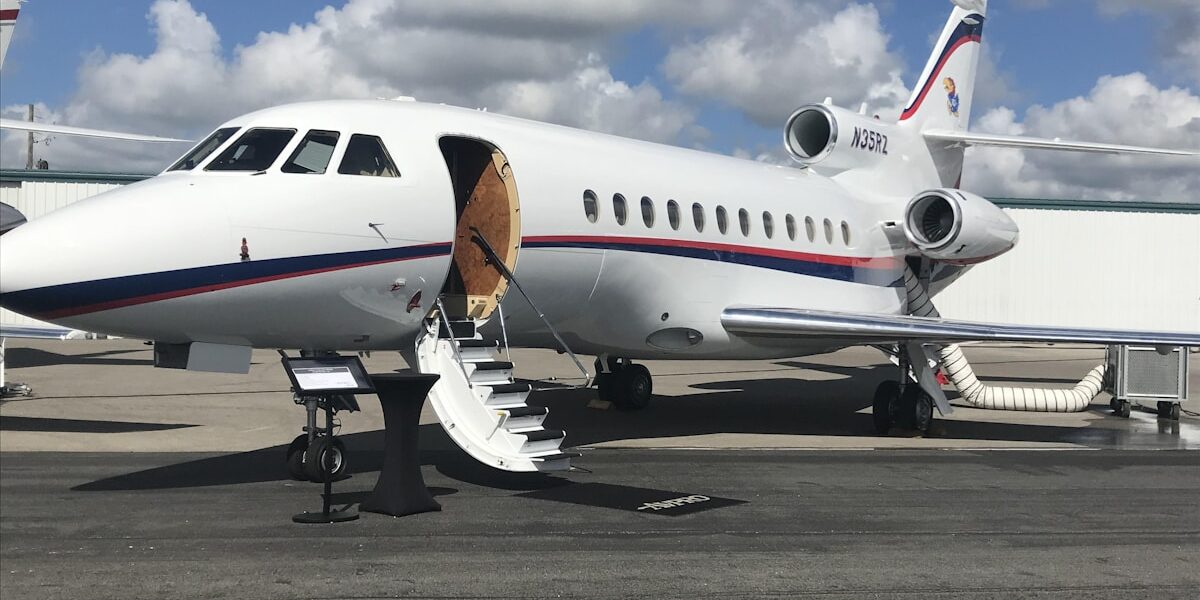
Quick answer: The Bombardier Challenger 350 and Cessna Citation Longitude are both two-pilot super-midsize business jets, but there is no universal “showdown” winner. The Challenger 350 is now primarily a used-aircraft choice, while Bombardier’s Challenger 3500 is its current evolution. The Longitude offers a different cabin, performance and support proposition. Compare the same payload, routes, runways, reserves, crew plan and ownership period.
Challenger 350 family overview
The Challenger 350 is part of Bombardier’s BD-100-1A10 family, following the Challenger 300. It introduced Honeywell HTF7350 engines, canted winglets, a flat-floor wide cabin and Collins Pro Line 21 Advanced avionics. The Challenger 3500 continues the family with a revised cabin and other enhancements.
These model names are related but not interchangeable. Used Challenger 300, 350 and newer 3500 aircraft can differ in engines, avionics, cabin, service bulletins and operating approvals. Verify the serial number, equipment list, airplane flight manual and maintenance records.
Challenger 350, 3500 and Citation Longitude
| Aircraft | Useful distinction | What to verify |
|---|---|---|
| Challenger 350 | Established BD-100 variant with HTF7350 engines and Pro Line 21 Advanced | Configuration, inspection status, programs and used-aircraft condition |
| Challenger 3500 | Current Bombardier evolution with updated cabin features | Exact options, delivery configuration and operating economics |
| Citation Longitude | Cessna super-midsize design with a different cabin, systems and support ecosystem | Payload-range, runway performance, options and mission costs |
Bombardier publishes a 3,400-nautical-mile theoretical maximum range for the 3500 with four passengers, two crew and NBAA IFR reserves under specified conditions. Textron publishes its own assumptions for the Longitude. Those figures should not be compared unless speed, payload, reserves and environmental assumptions are aligned.
Performance and runway analysis
Start with representative trips, not a single maximum-range number. Calculate takeoff, climb, cruise fuel, landing distance and reserves using current approved data for each aircraft. Include hot-and-high airports, wet or contaminated runways, winter headwinds, distant alternates and air-traffic routing.
Payload can change the answer. A trip that works with four passengers may require a fuel stop with nine passengers and baggage. Likewise, a longer-range specification has limited value if runway, climb or landing constraints prevent carrying the required fuel.
Cabin and passenger experience
The Challenger family is known for a wide, flat-floor cabin in the super-midsize category. The Longitude also emphasizes a stand-up, flat-floor cabin. Published dimensions provide a starting point, but interior layout, seat pitch, galley, lavatory, noise, baggage access, connectivity and refurbishment condition shape the real experience.
Inspect the actual cabin with the intended passenger count. A maximum seating figure can include arrangements an operator would not select for long trips. Build a realistic load sheet using passenger, bag, catering and equipment weights rather than assuming every seat and full fuel are always available together.
Engines and maintenance exposure
Challenger 350/3500 aircraft use Honeywell HTF7350 engines. The Longitude uses Honeywell HTF7700L engines. For either airplane, review hours, cycles, trend data, borescope history, life-limited components, inspections and engine-program enrollment. Confirm program transfer terms and exclusions directly.
Airframe due diligence should cover calendar and hourly inspections, landing gear, brakes, tires, pressurization, windshields, flight controls, avionics, auxiliary power unit, cabin systems, corrosion, repairs and deferred discrepancies. Review airworthiness directives and service bulletins for the exact model and serial number.
Training and two-pilot operations
Both aircraft require a two-pilot operational plan. Budget for type-specific initial and recurrent training, checking, recency, medicals, duty limitations and backup staffing. Insurance and the operator’s regulatory basis may impose experience or training conditions beyond basic certification.
The FAA’s BD-100 training material addresses Challenger 300/350 family differences, while the Longitude has its own aircraft-specific qualification path. Training should cover rejected takeoff, engine failure, rapid decompression, high-altitude operations, icing, unstable approaches, runway excursions, automation management and manual flight.
Dispatch and minimum-equipment planning
A complex jet can remain safe with certain inoperative equipment only under controlled conditions. The FAA Master Minimum Equipment List for the BD-100 family includes the Challenger 300, 350 and 3500, but an MMEL does not itself authorize an individual dispatch. Operators need an approved or authorized MEL as applicable, maintenance control and required procedures.
Ask how frequently each candidate aircraft has dispatched, what discrepancies recur, and how long parts or maintenance events have grounded it. Claimed reliability is less useful than the actual records and support available at the planned base.
Operating-cost comparison
Total cost includes fuel, engine and parts programs, scheduled inspections, unscheduled maintenance, insurance, training, navigation data, connectivity, hangar, crew, management, taxes and financing. An hourly estimate can hide fixed expenses or assume more annual utilization than the operation will achieve.
Model several years, including major inspection events and probable cabin or avionics work. Compare aircraft using identical missions, payloads, reserves and crew assumptions. Acquisition price, downtime and residual value can matter more than a small difference in cruise fuel.
Pre-purchase checklist
- Confirm the exact variant. Match serial number, engines, avionics and cabin to approved records.
- Run representative difficult missions. Test payload, runway and reserves under adverse conditions.
- Audit maintenance programs. Verify engine, APU and parts coverage and transfer obligations.
- Price scheduled events. Include calendar, hourly and life-limited requirements.
- Secure crew and training. Confirm simulator availability and insurance terms early.
- Use an independent specialist. Scope the inspection around the candidate aircraft’s history.
Other super-midsize alternatives
The Gulfstream G280 provides another established super-midsize option with its own cabin, runway and support characteristics. Larger aircraft such as the Bombardier Global 7500 solve a fundamentally different range and cabin problem and should not be compared by purchase price alone.
Frequently asked questions
Is the Challenger 350 still in production?
Bombardier’s current evolution is the Challenger 3500. Existing Challenger 350 aircraft remain relevant in the used market, subject to condition, support and mission fit.
Which has more range: Challenger 350 or Citation Longitude?
Published figures use different assumptions. Compare approved payload-range results for the same passenger count, speed, weather, routing, alternates and reserves.
Can either aircraft be flown single-pilot?
No. Plan, train, insure and budget for a qualified two-pilot crew.
Which one costs less to own?
It depends on acquisition price, utilization, programs, maintenance status, crew, financing and missions. Build a multi-year budget for actual candidate aircraft.
Sources
- Bombardier: Challenger 3500 configuration and stated performance assumptions
- Cessna: Citation Longitude product and specification information
- Bombardier: Challenger 350 launch, systems and performance context
- FAA: standardized Challenger 300/350 training curriculum recommendations
- FAA: BD-100 Challenger 300/350/3500 MMEL record



Stay in the loop
Get the latest aero weenie updates delivered to your inbox.