
Ask any commercial helicopter pilot over 40 years old where they learned to fly, and chances are the answer involves a Bell 206 JetRanger. For more than half a century, this elegant light helicopter defined rotorcraft training while simultaneously serving as the backbone of commercial operations worldwide. Though production has ended, the Bell 206’s influence on helicopter aviation remains immeasurable.
Origins of an Icon
The Bell 206 traces its origins to a 1960 U.S. Army competition for a Light Observation Helicopter (LOH). Bell’s original entry, the D-250, lost to the Hughes OH-6 Cayuse, but the company recognized the design’s commercial potential. Refined and relaunched as the JetRanger in 1967, the Bell 206 quickly captured the civil market that the military had overlooked.
The initial 206A featured a 317-hp Allison 250-C18 turbine engine, soon upgraded to the more powerful 250-C20 in the 206B. The definitive 206B-3 JetRanger III appeared in 1977 with the 250-C20J engine producing 420 shaft horsepower, establishing the performance standard that would remain through the model’s production life.
Specifications and Performance
The Bell 206B-3 JetRanger III offers capabilities that made it ideal for training and light utility work:
- Engine: Rolls-Royce (Allison) 250-C20J, 420 shp
- Maximum speed: 130 knots (150 mph)
- Cruise speed: 115 knots (132 mph)
- Range: 374 nautical miles
- Service ceiling: 13,500 feet
- Hover ceiling OGE: 4,000 feet
- Useful load: 1,430 pounds
- Seating: 1 pilot + 4 passengers
The LongRanger variants (206L series) stretched the fuselage to accommodate up to six passengers plus pilot, appealing to operators requiring greater capacity while maintaining the JetRanger’s handling qualities.
The Ultimate Training Platform
The Bell 206’s dominance in helicopter training arose from several characteristics that made it exceptionally suitable for instruction:
Forgiving Flight Characteristics: The JetRanger provides honest feedback to control inputs without the twitchy response that can overwhelm students. New pilots learn proper technique while the helicopter remains predictable through the learning curve.
Autorotation Behavior: Emergency procedure training requires practicing autorotations, and the 206’s rotor system provides consistent, reliable autorotative descent characteristics that build student confidence.
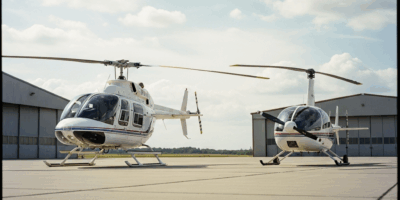
Visibility: The bubble windscreen offers excellent visibility for both student and instructor, essential for traffic pattern work and confined area operations training.
Operating Economics: Fuel consumption of approximately 25 gallons per hour and reasonable maintenance costs made the 206 economically viable for the repetitive flight cycles inherent in training operations.
Commercial Workhorse
Beyond training, the JetRanger served virtually every light helicopter mission imaginable:
Electronic News Gathering: Television stations across North America operated JetRangers for traffic reporting and breaking news coverage, with the aircraft’s reliability essential for daily operations on tight schedules.
Law Enforcement: Police departments found the 206 ideal for patrol, pursuit, and surveillance missions, with the cabin accommodating observers and basic tactical equipment.
Corporate Transport: Executive transport operators used JetRangers for short-range VIP flights, particularly in areas where landing zone limitations favored smaller helicopters.
Utility Operations: Agricultural spraying, power line patrol, pipeline survey, and photography missions kept thousands of JetRangers busy worldwide.
Military Service: The OH-58 Kiowa
The U.S. Army eventually embraced the Bell 206 design, procuring it as the OH-58 Kiowa after the OH-6’s production issues became apparent. The Kiowa served in observation, reconnaissance, and light attack roles, with armed variants playing significant roles in conflicts from Vietnam through the Global War on Terror.
The OH-58D Kiowa Warrior featured a mast-mounted sight, enhanced avionics, and weapons capability that transformed the basic airframe into a sophisticated scout helicopter. Foreign military operators also adopted the 206/OH-58 in substantial numbers.
Why Training Has Evolved
Modern flight training programs have largely transitioned to newer platforms, driven by several factors:
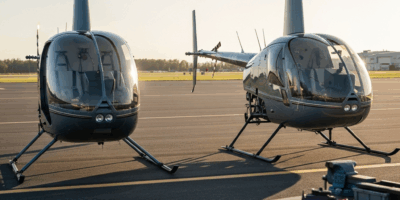
Robinson R22/R44: Frank Robinson’s piston-powered helicopters offered dramatically lower acquisition and operating costs, making them economically compelling for training despite flight characteristic differences.
Glass Cockpit Requirements: Airlines and commercial operators increasingly require experience with modern avionics, and newer training aircraft offer integrated glass panels that the JetRanger’s traditional gauges cannot match.
Aging Fleet: With production ended in 2017, the JetRanger fleet is aging. Airframe fatigue concerns, parts availability, and maintenance costs have pushed training operations toward newer alternatives.
The LongRanger and 407
Bell extended the 206 platform with the LongRanger series, adding cabin length for greater passenger capacity. The ultimate evolution came with the Bell 407, which retained the 206’s basic configuration while adding a four-blade rotor system and more powerful Rolls-Royce 250-C47B engine.
The 407 has become the spiritual successor to the JetRanger in many applications, offering performance and capabilities that the original design could not match while maintaining the handling qualities operators valued.
Legacy and Current Status
Bell produced over 7,300 Model 206 aircraft before ending production, making it one of the most manufactured helicopters in history. The global fleet continues operating, with thousands of JetRangers and LongRangers still flying daily.
Used aircraft values have declined as newer alternatives proliferate, but well-maintained examples remain serviceable workhorses. The extensive parts inventory and worldwide maintenance infrastructure mean JetRangers will continue flying for decades, even without new production.
For the generation of pilots who earned their wings in a JetRanger, the Bell 206 represents more than an aircraft. It symbolizes an era when a single design defined an industry segment, training tens of thousands of pilots while serving commercial operators in every corner of the world.
Though the production line has fallen silent, the Bell 206 JetRanger’s influence echoes in every helicopter pilot whose early logbook entries record hours in that distinctive teardrop fuselage, forever the aircraft that trained a generation.


Stay in the loop
Get the latest aero weenie updates delivered to your inbox.