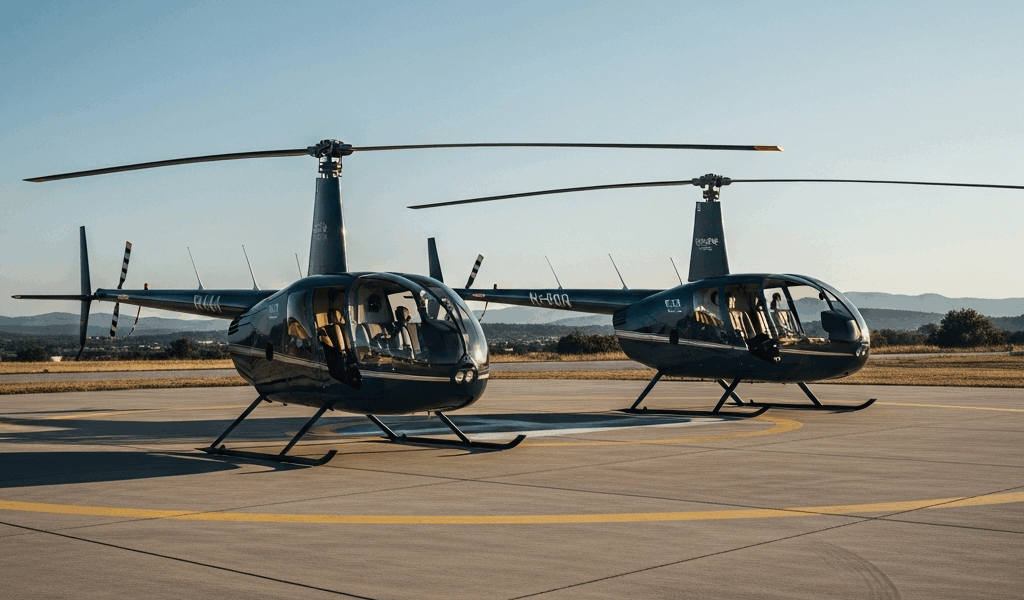
You have been renting R44s for a year, the private ticket is in your wallet, and now you are seriously looking at buying. The R66 keeps coming up in every hangar conversation — bigger, turbine-powered, more capable all around. But it is also $200,000 more expensive before you even start counting the hourly operating costs. So which one do you actually need?
R44 vs R66 at a Glance
Before the full breakdown, here is the side-by-side that answers the quick questions:
Robinson R44 Raven II: Lycoming IO-540 piston engine, 4 seats, ~1,100 lb useful load, 120 kt cruise, ~300 nm range, new price around $600,000, operating cost roughly $250-300/hr all-in.
Robinson R66 Turbine: Rolls-Royce RR300 turbine, 5 seats, ~1,270 lb useful load, 120 kt cruise, ~350 nm range, new price around $790,000+, operating cost roughly $350-400/hr all-in.
Cruise speed is similar. Range is similar. The R66 gives you a fifth seat, more useful load, and turbine reliability. The real question is whether those differences justify nearly $200,000 more at purchase and another $100/hr every time you fly.
Engine: Piston vs Turbine in Practice
The R44 runs a Lycoming IO-540 — same engine family powering half the GA piston fleet. Proven, parts available everywhere, and any A&P who has worked on Cessnas and Pipers can handle it. TBO sits at 2,200 hours, overhaul runs $40,000-50,000. The catch: piston engines lose power as altitude and temperature climb. A hot afternoon at 6,000 feet DA and you feel it in the margins.
The R66 runs a Rolls-Royce RR300 turbine. Fundamentally more reliable — fewer reciprocating parts, no carb ice worries, cleaner cold-weather starts. TBO is 3,000 hours with overhauls running $130,000-150,000. The per-hour reserve cost is higher, but the engine delivers consistent power up to altitude limits that would have the R44 breathing hard.
The real-world difference hits on hot days and at elevation. The R44 pilot is sweating density altitude charts and making weight-and-balance compromises before takeoff. The R66 pilot has power headroom. For sea-level coastal operations on moderate-temperature days, the performance gap is modest. In mountain terrain or desert heat, it is the difference between a confident departure and a “let us wait until the temperature drops” discussion with your passengers.
The Price Gap: Is the R66 Worth $200,000 More?
New R44 Raven II: approximately $600,000. New R66: approximately $790,000 or more with avionics packages. That is $190,000+ right out of the gate. Then operating costs widen the gap.
Over 1,000 flight hours, the R44 costs roughly $250,000-300,000 to operate (fuel, maintenance, overhaul reserves). The R66 costs $350,000-400,000 for those same hours. Jet-A burns faster than avgas in dollar terms, and the turbine overhaul reserve per hour is steeper despite the longer TBO interval.
Total ownership over 1,000 hours: R44 lands around $850,000-900,000. R66 hits $1,140,000-1,190,000. About a $300,000 gap when you add acquisition to operating expenses. For a private owner flying 100-200 hours per year, that is genuinely hard to justify unless your mission specifically requires what the turbine delivers.
Where the R66 Wins: High Altitude and Hot/High
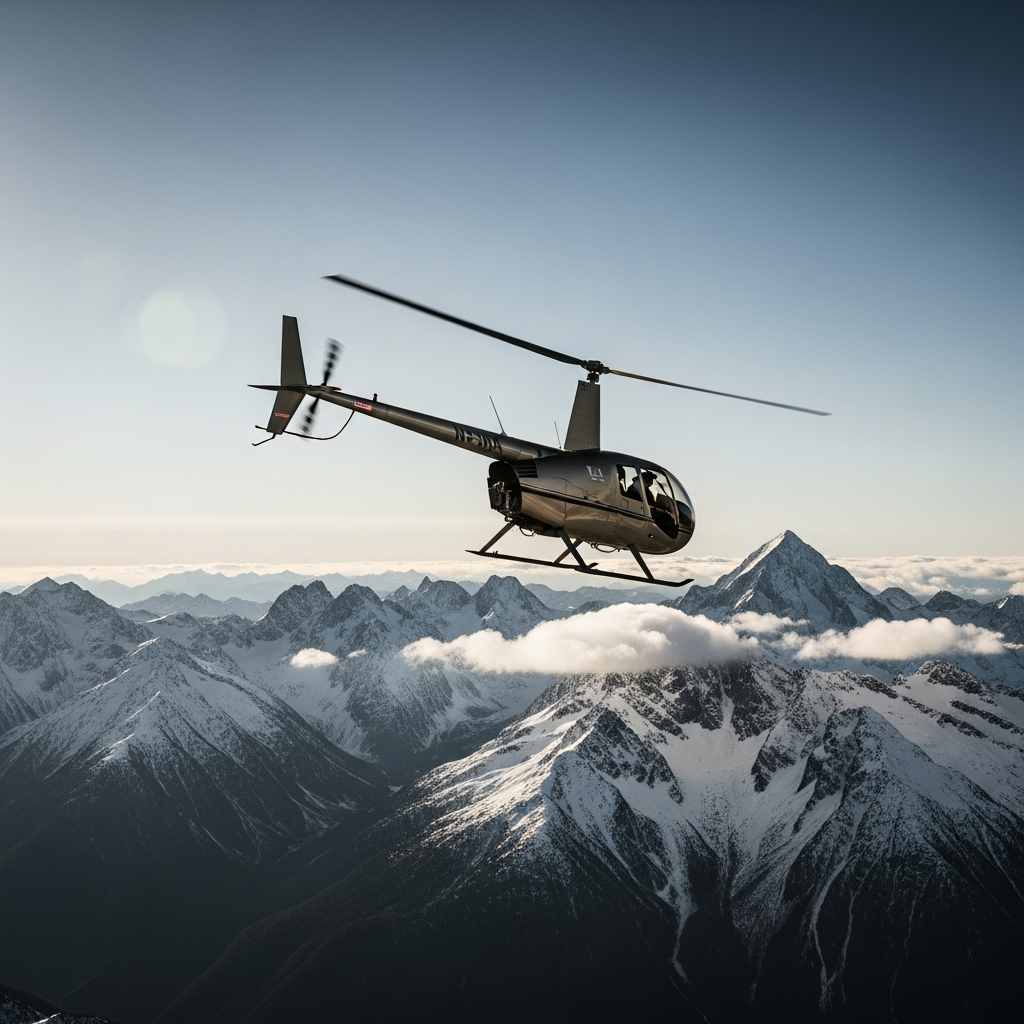
If you fly in Colorado, Utah, Montana, or anywhere across the mountain West, the R66 is a different machine entirely. The turbine’s altitude performance means you operate at 8,000-10,000 feet density altitude with useful payload remaining. The R44 at those conditions is working near its limits with reduced margins that limit what you can carry and where you can land.
Hot/high combinations — summer afternoons in the intermountain West, desert operations, high-elevation ranch properties — are where the R66 earns every dollar of its premium. The turbine does not suffer from density altitude the way a naturally aspirated piston does. Load the aircraft to near max gross, check the numbers, and depart with power margin the R44 simply cannot match in those conditions.
The fifth seat matters too, especially for charter or utility operators. Four passengers plus pilot in the R66 versus three plus pilot in the R44. For someone running scenic tours or shuttling clients, that extra seat generates revenue that offsets a chunk of the higher operating cost.
Where the R44 Still Makes Sense
The R44 is not the lesser helicopter — it is the right helicopter for specific missions. Flight training: the R44 is the most widely used training platform in the world, and at $100/hr less than the R66, the savings add up fast when you are building 500+ hours toward ratings. Local scenic work at low elevation — coastal flights, vineyard tours, beach runs — the piston handles these beautifully and saves you meaningful money doing it.
Cost-sensitive private ownership remains the R44’s sweet spot. A private pilot flying 100 hours per year for personal transportation and weekend trips — ranch access, family visits, the $100 hamburger — saves $30,000+ annually with an R44 versus an R66. Over five years, that is $150,000 that went toward capability you never actually needed. If your flying stays under 5,000 feet in temperate weather, that extra money is better spent on fuel and flying more hours.
The Verdict: Who Should Buy Which
Buy the R44 if: you are a private pilot buying your first helicopter, you fly mostly at low elevation in moderate conditions, operating cost matters, you do not need the fifth seat, or you run a flight school. The R44 does what most private owners need at a cost most private owners can actually sustain long-term.
Buy the R66 if: you fly mountain terrain regularly, you need five seats for charter or family hauling, you operate in hot/high conditions that compromise piston performance, or you are building a commercial operation where turbine reliability and payload capacity earn their premium through revenue. The R66 costs more because it does more — but only when your mission actually demands what it offers.
The R44 is the Honda Accord of helicopters — reliable, efficient, gets the job done without drama. The R66 is the turbocharged SUV — genuinely more capable when conditions get demanding, more expensive everywhere else. Pick based on where and how you fly, not on which one impresses the guy in the next hangar.

Stay in the loop
Get the latest aero weenie updates delivered to your inbox.