Why Comparing These Two Even Makes Sense
Robinson R44 vs Bell 206 JetRanger real-world costs has gotten complicated with all the turbine snobbery and piston-defender noise flying around. As someone who spent the better part of two years seriously shopping helicopters, I learned everything there is to know about what these machines actually cost to own. Today, I will share it all with you — including the stuff nobody wanted to show me when I was asking around on forums.
Every thread I found dissolved into arguments. Piston guys defending their fuel burns. Turbine guys defending their smoothness. And virtually nobody wanted to show their actual receipts. So I went a different route — talking directly to owners, operators, and a couple of very patient A&P/IAs who’ve wrenched on both airframes for decades.
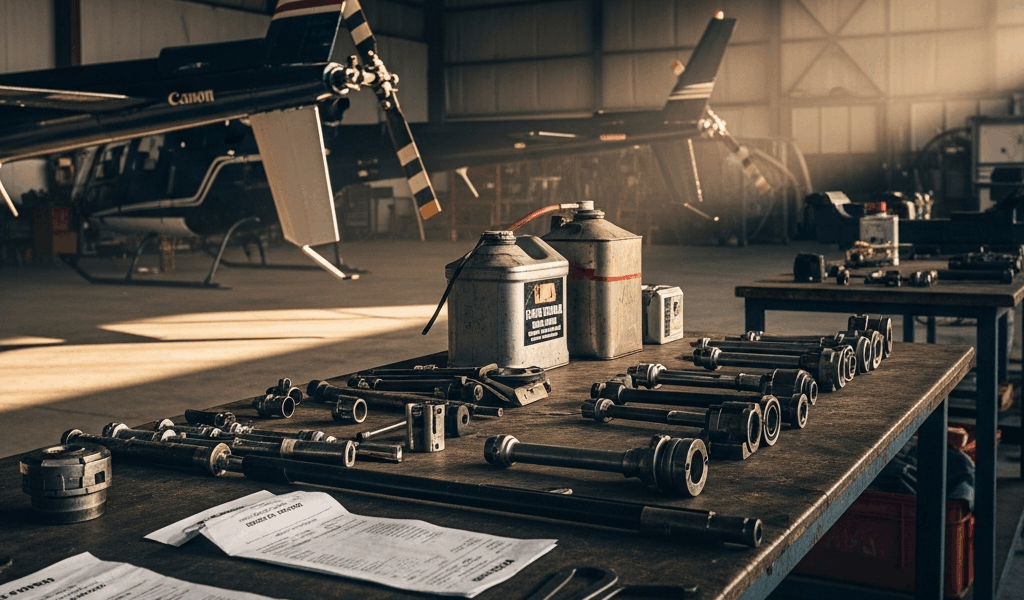
On paper, these helicopters don’t belong in the same conversation. The R44 is a four-seat piston machine Robinson has been building since 1992. The Bell 206 JetRanger is turbine-powered, with lineage going back to 1967 — flown by law enforcement agencies, offshore operators, and tour companies all over the world. Different eras. Different missions. Different price brackets, at least when both are new.
But what is the used market? In essence, it’s the great equalizer. But it’s much more than that. A well-maintained 2005 R44 Raven II sits somewhere between $180,000 and $260,000 depending on hours and configuration. A 2000-era Bell 206B3 with reasonable times? You can find one in the $300,000 to $450,000 range — sometimes lower if the engine is mid-time and the seller needs to move it fast. That’s not some impossible gap. That’s a financing conversation, not a fantasy. Buyers cross-shop these two constantly, and the ones who skip past the sticker price usually get educated the hard way.
Purchase Price and Financing Reality
A new Robinson R44 Raven II lists around $370,000 as of current Robinson pricing. A new Bell 206 — well, Bell moved on to the 505 Jet Ranger X years ago, so that comparison is mostly academic at this point. The real market is used. That’s where things get genuinely interesting.
Financing a piston helicopter and financing a turbine helicopter are two different experiences. Most aviation lenders treat turbine aircraft as stronger collateral. They hold value differently, depreciate more predictably, and carry a deeper institutional market behind them. I heard from one owner who got better rates on a $380,000 Bell 206 than on a $240,000 R44 — purely because the lender’s risk model preferred turbine assets. Not universal, but common enough to factor in before you start shopping.
- Typical used R44 Raven II (2003–2010): $180,000–$280,000
- Typical used Bell 206B3 (1998–2008): $300,000–$480,000
- Financing terms: 15–20 year amortization is common for both; rates shift significantly by lender and buyer profile
- Pre-purchase inspection costs: Budget $1,500–$2,500 for an R44; $2,500–$4,500 for a 206, given the engine borescope and additional systems involved
The monthly carrying cost difference on a $200,000 price gap — at current interest rates — lands around $1,100 to $1,400 per month. That number hits differently when you’re staring at your actual annual operating budget.
Annual Operating Costs Side by Side
Probably should have opened with this section, honestly. Purchase price is just the entry fee. What you pay every year is the real commitment.
Here’s what I’m working with throughout: 150 flight hours per year, which is realistic for a private owner doing weekend flying and occasional cross-country trips. Avgas at $7.20/gallon, Jet-A at $6.40/gallon — rough national averages that shift constantly, so adjust for your local FBO. Hangar cost assumed at $600/month, which is laughably cheap in coastal markets and about right for the middle of the country.
Fuel Burn
The R44 Raven II burns approximately 16–17 gallons per hour at cruise. At 150 hours and $7.20 per gallon, that works out to roughly $18,400–$18,500 annually in fuel. The Bell 206B3 burns around 22–24 gallons per hour of Jet-A. Same hours, same math: approximately $21,100–$23,000 per year. Jet-A is cheaper per gallon than avgas right now, which softens the turbine’s thirst somewhat. The 206 still burns more money every year, though. That’s just physics.
Annual Inspections and Squawk Budget
A standard annual inspection on an R44 runs $1,800–$2,800 at most shops — assuming no surprises. Budget another $2,000–$4,000 per year for unscheduled maintenance. The random squawks, tail rotor cable adjustments, avionics hiccups, the occasional swashplate bearing that decides your flight review is the perfect moment to start complaining. Total: roughly $4,000–$7,000 per year in inspection and incidental costs.
The Bell 206 annual runs $3,500–$6,000. Squawk budget runs higher, too — there are simply more systems. Fuel control, N1/N2 governors, chip detectors, bleed air, the Allison 250’s compressor wash schedule. Real-world incidental maintenance budget for a 206 sits around $5,000–$10,000 per year. That spread matters more than people expect.
Insurance
Hull and liability insurance for an R44 — private pilot, 300 hours total time — typically runs $6,000–$9,000 annually on a hull value around $220,000. The Bell 206 with the same pilot profile: $10,000–$16,000 per year. Insurers charge more for turbines, more for higher hull values, and significantly more if you’re low-hours in type. First year in a 206 without a turbine transition course on record? Expect the high end of that range. Don’t make my mistake of underestimating that line item.
The Side-by-Side Annual Summary
- R44 Raven II — estimated annual cost at 150 hrs: $36,000–$48,000 (excluding overhaul reserve and financing)
- Bell 206B3 — estimated annual cost at 150 hrs: $50,000–$72,000 (excluding overhaul reserve and financing)
Overhaul Reserves and the TBO Gut Punch
Stung by a surprise engine quote early in my research, I started treating overhaul reserves as a mandatory operating cost — not an optional savings category. This is where the turbine myth either earns its wings or quietly collapses.
The R44 runs a Lycoming IO-540-AE1A5. TBO is 2,200 hours. A factory overhaul from Lycoming runs approximately $28,000–$38,000 depending on what they find inside. Divide that across 2,200 hours and you’re reserving roughly $13–$17 per flight hour for engine work alone. The R44 also carries a 12-year airframe retirement schedule for certain components and Robinson’s own recommended overhaul at 2,200 hours — adding another reserve obligation in the range of $8–$12 per hour when you include main rotor blades, tail rotor blades, and dynamic components.
Total R44 overhaul reserve: approximately $22–$30 per flight hour.
Now for the Bell 206 with its Rolls-Royce — formerly Allison — 250-C20B or C20J. TBO is 3,500 hours. Sounds better. The overhaul cost is not better. A factory overhaul on an Allison 250 runs $120,000–$180,000 at current shop rates. Divide $150,000 across 3,500 hours and you’re already at $43 per hour just for the engine. Add transmission and dynamic component reserves — the 206’s main transmission overhaul alone runs $35,000–$55,000 — and total reserves climb to $60–$80 per flight hour.
At 150 hours per year, the R44 owner sets aside $3,300–$4,500 annually in reserves. The 206 owner should be banking $9,000–$12,000 per year. Most don’t. That’s how you end up with a beautiful turbine helicopter and absolutely no money for its next inspection.
The Allison 250 is genuinely robust and maintainable. The reliability argument for turbines is real. Reliable doesn’t mean cheap to overhaul, though — and that distinction is everything.
Which One Should You Actually Buy
Two buyer profiles. Real answers. So, without further ado, let’s dive in.
The private owner flying 100–200 hours per year, based at a general aviation airport, using the helicopter for personal travel and the occasional $100 hamburger run: Buy the R44. The total five-year cost of ownership — purchase, financing, fuel, insurance, maintenance, and reserves — comes in roughly $80,000–$120,000 lower than a comparable 206 scenario. That’s what makes the R44 endearing to us private-owner types. It’s easier to insure at low hours, cheaper to hangar because it’s physically smaller, and the maintenance network is enormous. Parts are available everywhere. Shops know it cold. You lose turbine smoothness and some payload flexibility. You gain financial survival.
The operator building a small charter, tour, or utility business with realistic paths to 300-plus hours per year: The Bell 206 starts making sense. Charter customers pay for the turbine experience — the sound, the feel, the perceived professionalism of it. The economics improve at higher utilization because fixed costs spread across more hours. The 206 is IFR-certifiable in configurations the R44 simply isn’t, and it’s accepted on contracts and heliports that explicitly require turbine equipment. The math still demands respect — you need volume to justify those overhaul reserves — but the revenue potential changes the entire equation.
I’m apparently a spreadsheet person, and careful modeling works for me while gut-feel shopping never does. No spreadsheet survives first contact with an actual maintenance bill, though. I say that having watched a beautifully constructed five-year cost projection detonate when a 206 owner I know hit an unexpected hot section inspection at 1,400 hours — $31,000 that lived nowhere in his budget. Build margin into whatever number you land on. Both these helicopters will find it.



Stay in the loop
Get the latest aero weenie updates delivered to your inbox.