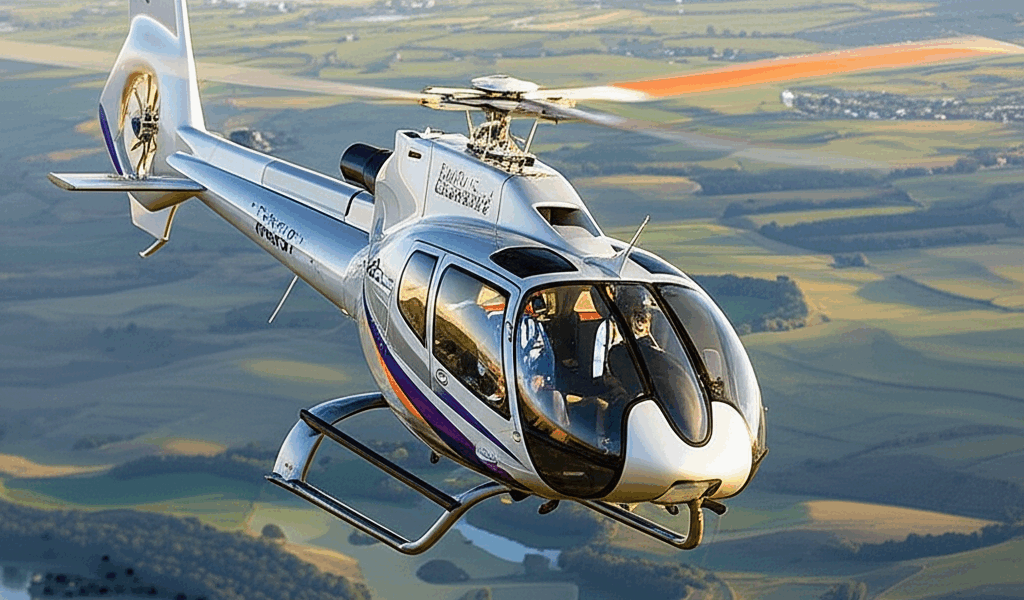
Choosing between the Bell 505 and Robinson R66 has gotten complicated with all the marketing noise flying around. As someone who spent six months test-flying both machines before finally writing a check, I learned everything there is to know about this decision. Today, I will share it all with you.
I remember sitting in a hangar outside Scottsdale, sweat dripping down my neck after back-to-back demo flights, wondering why nobody had just laid out the honest comparison I needed. Every article I found read like a press release. So here we are — the guide I wish I’d had.
That’s what makes this helicopter comparison endearing to us aviation buyers — we’re not picking between a good option and a bad one. We’re picking between two genuinely capable turbine helicopters that happen to serve different priorities. Let me walk you through what I found.
The Numbers Side by Side
Before I get into the flying and the feelings, here’s the cold data. I pulled these from manufacturer specs and cross-checked against what I actually saw during my evaluation flights.
| Specification | Bell 505 Jet Ranger X | Robinson R66 Turbine |
|---|---|---|
| Engine | Safran Arrius 2R (504 shp) | Rolls-Royce RR300 (300 shp) |
| Seating Capacity | 1 pilot + 4 passengers | 1 pilot + 4 passengers |
| Max Cruise Speed | 125 knots | 120 knots |
| Range | 306 nm | 350 nm |
| Useful Load | 1,500 lbs | 1,420 lbs |
| Empty Weight | 1,680 lbs | 1,280 lbs |
| Max Gross Weight | 3,680 lbs | 2,700 lbs |
| Fuel Consumption | ~30 gal/hr | ~23 gal/hr |
| Engine TBO | 3,000 hours | 2,000 hours |
| Avionics | Garmin G1000H NXi | Garmin G500H |
| New Price (2025) | ~$2.1 – $2.3 million | ~$1.4 – $1.7 million |
What the Flying Actually Feels Like
Numbers are great, but they don’t tell you how the stick feels in your hand at 8,500 feet density altitude. So let me.
The Bell 505 packs a 504 shp Safran Arrius 2R under the cowling — that’s nearly double the horsepower of the R66’s Rolls-Royce RR300 at 300 shp. I flew the Bell out of a strip near Sedona last summer when it was about 105 degrees on the ramp. Density altitude was ugly. And the Bell just… went. There was power margin to spare, and that kind of confidence changes how you plan a flight. The R66 would’ve gotten the job done in those same conditions, but you’d feel the airplane working harder. You’d be thinking about it more.
I got frustrated early on because every forum thread had conflicting speed claims. So I did the nerd thing — logged actual GPS groundspeeds during every test flight I could get. The Bell consistently came in at 123 to 126 knots. The Robinson sat around 118 to 121. Honestly? For most missions, that five-knot difference doesn’t change your day. You’re not going to notice it unless you’re running a tight charter schedule.
Where I did notice a difference was the cabin. The 505 feels bigger inside. The flat floor and that panoramic windscreen make a real impression on passengers. The R66 is comfortable enough, don’t get me wrong, but it’s a tighter space. If you’re doing tours or VIP work, the Bell’s cabin sells itself.
Range and Fuel: Where Robinson Wins
Here’s something that surprised me, and it’s a detail dealers for Bell don’t love to dwell on: the less powerful R66 actually flies farther on a tank. Robinson claims 350 nautical miles versus Bell’s 306. My flight planning math and real-world legs confirm this holds up in practice — it’s not just brochure fantasy.
The reason’s straightforward. The R66 burns about 23 gallons per hour while the Bell drinks closer to 30. At today’s Jet-A prices, we’re talking a $50 to $70 per hour difference in fuel costs alone. That might not sound like much until you multiply it across a full year.
If you’re flying 500 hours annually — which plenty of commercial operators do — that’s $25,000 to $35,000 in fuel savings. Real money. The kind of money that changes your operating budget in meaningful ways. And it compounds, year after year.
What They Actually Cost
Probably should have led with this section, honestly.
A new R66 will set you back somewhere between $1.4 million and $1.7 million, depending on how you option it out. The Bell 505 commands $2.1 million to $2.3 million. That’s a $500,000 to $700,000 gap — and when I first saw those numbers side by side, it gave me serious pause. That kind of delta funds a lot of flight hours, a lot of maintenance reserves, or frankly a decent chunk of a hangar lease.
The used market tells a similar story. I spent weeks browsing listings and talking to brokers. Clean, mid-time R66s were trading between $500,000 and $900,000. Pre-owned Bell 505s — and there aren’t as many on the market — start around $1.1 million and only go up from there.
Then there’s insurance. This one caught me off guard. My broker quoted roughly 30% less for equivalent R66 coverage. Lower hull value plays into that, obviously, but Robinson’s long track record with the R44 and R66 platforms gives underwriters more actuarial data to work with. They like that. Your wallet likes that too.
The Glass Cockpit Question
This is where I’ll admit my bias up front: I’m a glass cockpit person. Always have been. So take what I’m about to say with that grain of salt.
Bell ships the 505 with a Garmin G1000H NXi as standard equipment. Dual 10.4-inch displays, synthetic vision, helicopter terrain awareness — the whole integrated package. First time I powered it up, I just sat there for a minute taking it in. It’s genuinely impressive avionics for this weight class.
Robinson counters with the Garmin G500H and offers the HeliSAS autopilot as an option. It’s a perfectly capable system and thousands of pilots fly R66s professionally with it every day. But the integration level isn’t quite the same. The G1000H NXi feels like it was designed as a system from the ground up. The G500H feels like very good avionics bolted into a helicopter. Both work. One just feels more… finished.
That said, plenty of experienced operators I talked to shrugged at the avionics difference. “I need a working GPS and a functioning autopilot,” one charter guy told me. “Everything else is nice to have.” Fair point.
Support Networks and Parts
Bell’s service network reaches into over 100 countries. If something breaks, you can generally get parts without too much drama. I talked to a few 505 operators who said they’d never waited more than a few days for anything critical. You do pay a premium for this access through component pricing, though — Bell parts aren’t cheap.
Robinson takes a different approach with their factory-direct model. Parts cost less. Quite a bit less, in some cases. And with over 1,500 R66s flying worldwide, the platform has proven itself reliable enough that the slightly thinner service network hasn’t become a real problem for most owners. That said, if you’re operating in remote international locations, Bell’s broader footprint matters more. It’s worth mapping out where you’ll actually be flying before this factor tips your decision.
Making the Call
After six months of research, demo flights, spreadsheet torture, and more hangar conversations than my wife appreciated, here’s how I’d break it down.
The Robinson R66 makes sense if:
- Purchase price and ongoing operating costs are the primary drivers of your decision
- You want the best range and fuel efficiency in a light turbine
- You’re a private owner or smaller operation watching every dollar
- The Robinson owner community and factory-direct support model appeals to you
The Bell 505 makes sense if:
- You regularly fly in demanding environments — hot days, high altitude, heavy loads
- Integrated avionics matter for your mission profile or you just value top-tier glass
- Commercial work where the Bell name and cabin presence carry weight with clients
- That 3,000-hour engine TBO aligns with how many hours you’re putting on annually
Both helicopters genuinely serve their markets well. The R66 represents the most affordable path into turbine helicopter ownership that exists right now. The Bell 505 delivers more raw capability and polish at a meaningfully higher price. Neither choice is wrong — they’re just optimized for different people with different priorities and different bank accounts.
I ended up going with the Bell. But that reflects my specific mission profile, where I fly, and my financial situation. Your math might point you somewhere completely different, and that’s fine. Don’t let any dealer or forum warrior tell you there’s one universally correct answer here. There isn’t.




Stay in the loop
Get the latest aero weenie updates delivered to your inbox.