
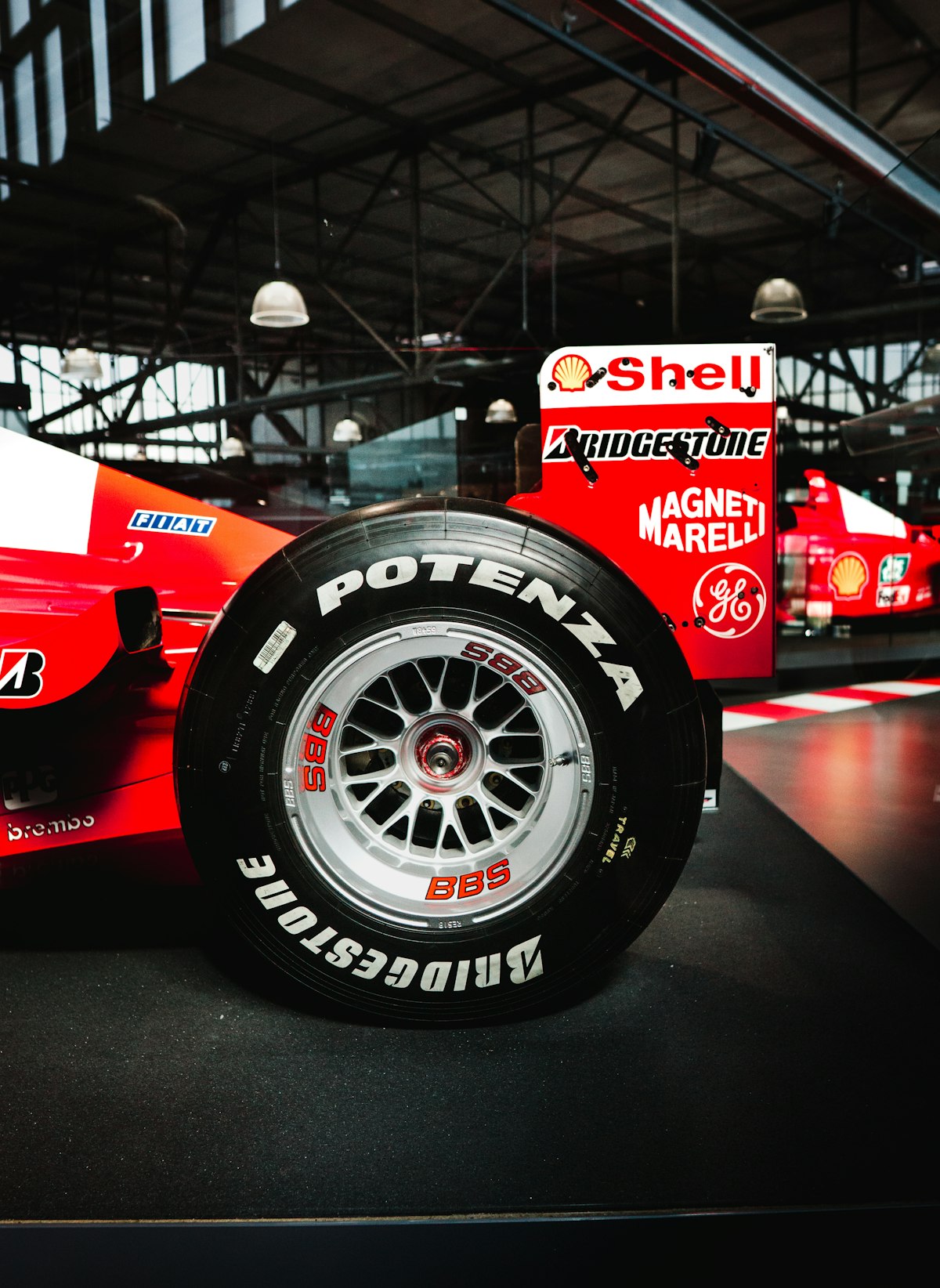
Cross-discipline aerodynamics has gotten complicated with all the specialized jargon flying around between cycling, motorsport, and aviation. As someone who spent two decades as an aerospace engineer before becoming obsessed with bike racing, I learned everything there is to know about how these fields share fundamental principles. Today, I will share it all with you.
That’s what makes aerodynamic knowledge endearing to us performance geeks – the same physics that enable a cyclist to save watts in a time trial apply to Formula 1 cars navigating corners and aircraft cruising at altitude. The math doesn’t care what’s moving through the air.
The Universal Challenge of Drag
Whether moving through air at 25 mph on a bicycle or 600 mph in a jet, the fundamental challenge remains identical: minimizing the resistance that opposes motion. The drag equation applies universally, though the relative importance of its components varies by application.
Pressure drag results from the pressure differential between the front and rear of a body moving through fluid. Objects with blunt rear surfaces create low-pressure wake regions that pull backward. Streamlining reduces this pressure differential by allowing air to flow smoothly around the body.
Skin friction drag occurs from air molecules interacting with surfaces. Even perfectly streamlined shapes experience friction drag proportional to their surface area. Surface treatments and boundary layer management address this component.
Induced drag appears when generating lift or side forces. Wings creating lift also create tip vortices that induce additional drag. This component dominates aircraft design but matters less in ground-based applications.
Lessons from Formula 1
Formula 1 represents perhaps the most intensive aerodynamic development environment in motorsport. Teams spend hundreds of millions annually optimizing airflow around cars capable of generating more downforce than their own weight. I’ve consulted with two F1 teams on CFD methodology, and the resource levels are staggering.
Probably should have led with this section, honestly – ground effect aerodynamics revolutionized F1 design. By shaping the car’s underside to accelerate airflow beneath the chassis, designers create low-pressure regions that suck the car toward the track. Modern F1 cars generate significant downforce from floor design alone.
Vortex generation serves counterintuitive purposes in racing. Strategic vortices energize boundary layers, preventing flow separation and maintaining attached flow longer. The bargeboard region of F1 cars creates complex vortex structures that improve airflow downstream.
Cycling applications have borrowed F1 concepts. Textured fabrics that trip boundary layers to turbulent flow mimic racing car surface treatments. Position optimization parallels driver posture adjustment within cockpits.
The fundamental tradeoff between drag and downforce doesn’t apply directly to cycling, but the principle of balancing competing aerodynamic objectives transfers. Cyclists balance aerodynamics against power output capability, comfort, and cooling – different constraints but similar optimization challenges.
Aircraft Efficiency Evolution
Commercial aviation has pursued efficiency improvements continuously since the jet age began. Modern aircraft achieve fuel efficiency gains through aerodynamic refinement combined with propulsion and materials advances.
Winglet development exemplifies iterative aerodynamic improvement. Early winglet designs reduced induced drag by 3-5%. Blended winglets improved performance further. Current split-tip designs achieve even better results. Each generation applies refined understanding of tip vortex behavior.
Laminar flow research promises substantial drag reduction. Natural laminar flow wings maintain smooth boundary layers across larger portions of the surface. Hybrid laminar flow control uses suction to extend laminar regions further. Some current aircraft incorporate laminar flow nacelles with measurable efficiency benefits.
Riblet films – microscopic grooved surfaces inspired by shark skin – have undergone extensive airline testing. These surface treatments reduce skin friction drag by several percent. Application challenges and maintenance requirements have limited adoption, but the technology demonstrates nature-inspired innovation potential.
Cycling has explored similar concepts. Textured skinsuit fabrics manage boundary layer transition similarly to aircraft surface treatments. Golf ball dimple patterns inspired early textile experiments, though current fabrics use more sophisticated approaches.
Wind Tunnel Testing Across Applications
Wind tunnel methodology remains consistent across domains despite different scales. The same principles of controlled flow measurement apply whether testing an aircraft model, race car, or cyclist.
Scale effects require careful consideration. Reynolds number matching ensures scaled-down tests accurately represent full-size behavior. Cycling tests typically use full-scale subjects, avoiding these complications. Aircraft and automotive testing must account for scale effects through correction factors or matched conditions.
Moving ground simulation matters for ground vehicles. Stationary floors create unrealistic boundary layers beneath test subjects. F1 and automotive tunnels use rolling roads or boundary layer suction. Cycling tunnels debate the necessity of rolling floors versus stationary platforms with correction factors.
Yaw sweep testing characterizes crosswind performance. Aircraft experience varying angles of attack. Cars encounter wind at angles relative to travel direction. Cyclists face similar crosswind effects. All applications benefit from understanding performance across yaw angle ranges.
Computational Fluid Dynamics Advancement
CFD simulation has transformed aerodynamic development across industries. The ability to visualize and quantify airflow computationally enables exploration impossible in physical testing.
Mesh resolution determines simulation accuracy. Complex geometries require millions of cells to capture flow features properly. Cycling applications use increasingly refined meshes to model fabric textures and small-scale flow structures.
Turbulence modeling challenges persist despite computational advances. Different turbulence models suit different applications. Selecting appropriate models requires expertise and validation against experimental data.
F1 teams run continuous CFD simulations within regulated computational limits. Aircraft manufacturers conduct thousands of virtual test runs during design phases. Cycling equipment developers increasingly rely on CFD for initial design exploration before physical prototyping.
Current CFD accuracy enables confident design decisions for aircraft and automotive applications. Cycling CFD continues improving but hasn’t achieved the same reliability for final design validation. Tunnel testing remains necessary for cycling performance claims.
Materials and Construction
Structural materials affect achievable shapes and surface qualities. Carbon fiber composites revolutionized aerodynamic possibilities across applications by enabling complex forms with smooth surfaces.
Aircraft skins require exceptional smoothness for laminar flow achievement. Manufacturing tolerances and joint designs affect drag performance. Airlines invest in surface condition maintenance to preserve aerodynamic efficiency.
Cycling frame construction has evolved from welded tubes to monocoque carbon structures optimized for airflow. Tube shapes evolved from round to teardrop to truncated airfoil sections as manufacturing capabilities advanced.
Fabric technology enables aerodynamic features impossible in rigid materials. Speed suits incorporate precisely engineered textures in specific zones based on local flow conditions. The flexibility to vary surface properties across a garment creates optimization opportunities unique to clothing applications.
Position Optimization Principles
Human positioning within vehicles and on bicycles presents common optimization challenges. The body creates significant drag that proper positioning can reduce.
Fighter pilots adopt specific postures for high-G maneuvering that coincidentally reduce drag. Race car drivers position themselves for control and drag reduction within cockpit constraints. Cyclists have the most flexibility in positioning but must balance aerodynamics against power production.
Head position affects airflow around the body regardless of application. Helmets in all contexts serve aerodynamic and protective purposes. The optimal head angle depends on helmet design and body position.
Arm and shoulder positioning creates the largest variable in cycling aerodynamics. Similar principles apply to arm position in recumbent vehicles and driver positioning in open-cockpit race cars. Reducing frontal area while maintaining control remains the universal challenge.
Real-World Versus Controlled Testing
Laboratory conditions never perfectly replicate real-world operation. Understanding the gap between controlled testing and actual use prevents over-reliance on tunnel numbers.
Aircraft operate in turbulent, stratified atmosphere with varying temperatures and densities. Cruise performance differs from sea-level test conditions. Manufacturers provide performance corrections for altitude and temperature variation.
Race cars experience dirty air from other vehicles, tire debris, and track temperature variation. Aerodynamic performance degrades in traffic. Teams optimize both clean-air performance and degraded conditions.
Cyclists encounter headwinds, crosswinds, drafting situations, and climbing positions that differ from tunnel testing scenarios. Equipment optimized for zero-yaw conditions may underperform in variable winds. Testing across conditions provides more useful data than single-point optimization.
Emerging Technologies
Active aerodynamics represents the frontier across applications. Adjustable surfaces that respond to conditions promise performance improvements beyond fixed designs.
Aircraft deploy various flap, slat, and spoiler configurations for different flight phases. Future designs may incorporate more continuously variable surfaces enabled by morphing structures or smart materials.
F1 cars have used driver-adjustable systems like DRS (Drag Reduction System) for overtaking. Regulations limit active aerodynamics to maintain competition equity, but the technology continues developing for road cars.
Cycling applications remain largely passive due to rules and practical constraints. However, adjustable position systems within regulations could optimize for varying race conditions. Real-time position feedback based on speed and wind conditions represents an emerging possibility.
Cross-Pollination of Ideas
Ideas transfer between aerodynamic applications more frequently than commonly recognized. The collaborative and competitive nature of engineering ensures concepts spread across domains.
Shark skin riblets developed in aerospace research influenced cycling skinsuit development. Dimpled golf ball patterns inspired textile experiments across sports. Winglet concepts from aviation appeared in F1 designs and cycling helmet forms.
Testing methodology improvements spread quickly. PIV (Particle Image Velocimetry) techniques developed in research environments now appear in cycling and automotive facilities. Data analysis methods refine continuously across applications.
Personnel movement between industries accelerates knowledge transfer. Engineers moving between aerospace, automotive, and sports applications carry experience and approaches that cross-pollinate innovation.
The Future of Aerodynamic Optimization
Machine learning and AI increasingly influence aerodynamic design. Pattern recognition in CFD results enables automated optimization beyond human intuition. Generative design produces shapes that engineers might never conceive independently.
Manufacturing advances enable previously impossible geometries. Additive manufacturing produces complex internal structures and surface features. Future aerodynamic designs may appear alien compared to current conventions.
Sustainability pressures drive efficiency emphasis across applications. Aviation faces particular scrutiny regarding emissions. Automotive electrification shifts priorities toward range extension through drag reduction. These pressures will accelerate aerodynamic innovation.
Cycling aerodynamics will continue benefiting from advances in other fields. The sport’s accessibility for testing and iteration makes it an excellent testbed for concepts eventually applied elsewhere.
The Takeaway
Aerodynamic principles transcend individual applications. The physics remain consistent whether optimizing a cyclist’s position, a race car’s bodywork, or an aircraft’s wing design. Understanding concepts from adjacent fields enriches approach to any specific application.
Cyclists benefit from appreciating the broader aerodynamic landscape. Concepts from motorsport and aviation often apply directly or inspire adaptation. The marginal gains available in cycling connect to the same phenomena that enable faster aircraft and more efficient vehicles.
Future aerodynamic developments will continue crossing boundaries between applications. Staying aware of advances in other fields positions cyclists and equipment designers to apply emerging concepts earlier. The universal nature of fluid dynamics ensures that innovation anywhere potentially benefits applications everywhere.



Stay in the loop
Get the latest aero weenie updates delivered to your inbox.